
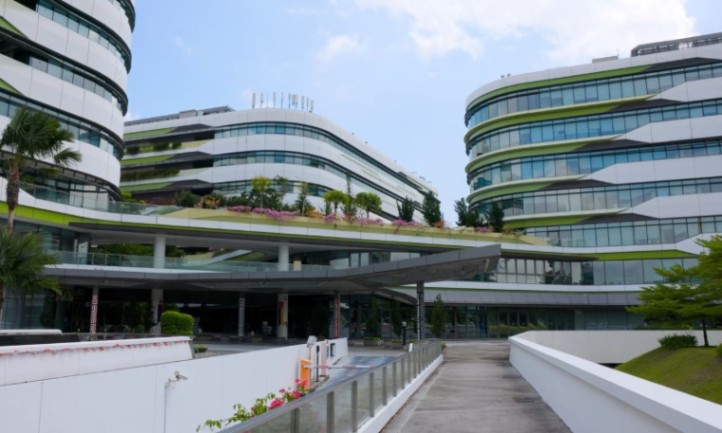
Singapore has a strong position as a global education hub, with four universities earning places in the QS World University Rankings 2026 among more than 1,500 assessed institutions.
International recognition reflects strong performance across eight evaluation indicators, including:
- Academic reputation
- Employer reputation
- Citations per faculty
- International research networks
Regional leadership becomes especially clear as one institution secures a place in the global top ten, while others reinforce Singapore’s academic depth across multiple disciplines.
Let’s see which universities those are.
1. National University of Singapore (NUS) – Rank #8 Globally, #1 in Asia
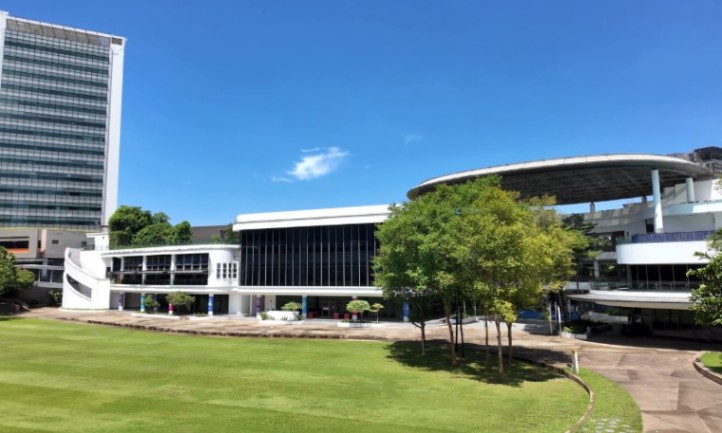
The National University of Singapore ranks 8th worldwide and holds the top position in Asia, retaining its global standing from 2025.
Placement positions NUS among the top 0.5% of universities worldwide out of 8,467 assessed institutions, reinforcing long-term consistency at the highest level of global higher education.
Overall performance reaches a score of 95.9, driven by exceptionally strong results across multiple indicators.
Key quantitative results demonstrate how academic influence and research strength combine at scale:
- Academic Reputation score of 99.9, placing NUS among the highest-rated institutions globally
- Citations per Faculty score of 95.9, reflecting sustained research impact
- Overall Score of 95.9, confirming balanced excellence across evaluated criteria
Employer reputation and international research partnerships show notable gains, strengthening global visibility and reinforcing links between academic output and workforce readiness.
Strong outcomes in graduate employment contribute directly to international confidence in NUS-trained talent.
Academic milestones include celebrating 120 years of academic excellence in 2025, marking a long institutional presence within global higher education.
Regional performance remains especially competitive, with leading placements across Asia in several categories.
Regional results reflect this sustained strength:
- Top three placement in Asia for Academic Reputation
- Top three placements in Asia for Sustainability
- Second place in Asia for Employment Outcomes
Institutional leadership reinforces long-term direction, with President Professor Tan Eng Chye stating a commitment to shaping the future with purpose and impact.
Global ranking results support Singapore’s broader role in research leadership, innovation output, and talent development through internationally recognized academic institutions.
2. Nanyang Technological University (NTU) – Rank #12 Globally
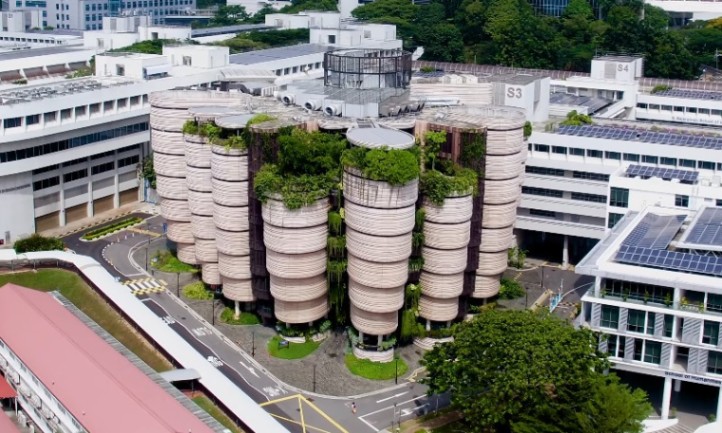
Nanyang Technological University secures 12th place globally in the QS World University Rankings 2026, reinforcing its position as one of Asia’s leading research-driven institutions.
Global placement reflects sustained excellence across teaching quality, research output, and international recognition.
Overall score reaches 93.7, confirming strong balance across evaluated indicators and long-term consistency at the highest levels of global higher education.
Performance strength becomes evident through several core metrics that measure academic credibility and research influence at scale:
- Academic Reputation score of 97.1, signaling strong peer recognition worldwide
- Citations per Faculty score of 94.6, indicating high-impact research productivity
- Overall Score of 93.7, demonstrating broad competitiveness across ranking categories
Academic strengths remain concentrated in engineering, sustainability, and interdisciplinary education, with programs designed to address technological advancement, climate priorities, and complex global challenges.
Curriculum structure supports cross-disciplinary collaboration, enabling research teams to work across traditional academic boundaries.
Research output continues to influence innovation across multiple sectors, including advanced manufacturing, artificial intelligence, clean energy, and biomedical sciences.
Strong international research networks support collaboration with leading institutions, reinforcing NTU’s global academic presence and citation performance.
Regional positioning places NTU second in Singapore, after NUS, and maintains a clear leadership role within national higher education.
Frequent recognition among top young universities worldwide further supports its reputation for rapid institutional growth and modern research infrastructure.
3. Singapore Management University (SMU) – Rank =511 Globally
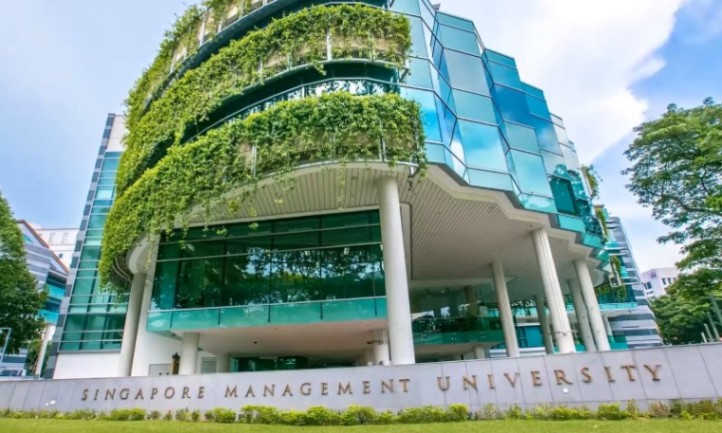
In the third place, we have Singapore Management University, which ranks equal 511th globally in the QS World University Rankings 2026, reflecting steady progress in international assessments and growing global recognition.
Overall score stands at 31.6, supported by gradual improvements across research output and academic reputation indicators.
Core performance metrics outline SMU’s current global positioning:
- Overall Score of 31.6
- Citations per Faculty score of 30.9
- Academic Reputation score of 19.4
Institutional focus centers on business, law, and social sciences, with academic structures designed to mirror professional environments.
Program delivery shows seminar-style teaching, case-based learning, and collaborative projects that align academic theory with professional practice.
Teaching approaches prioritize practical application and sustained industry engagement, supporting strong graduate employability outcomes.
On the other hand, sources such as scholarships for international students contribute to making education in Singapore more accessible to a diverse international student body.
Faculty members maintain close ties with business leaders, legal professionals, and policy institutions, thereby strengthening the relevance of the curriculum and opportunities for applied research.
Urban campus positioning plays a direct role in industry integration.
Proximity to Singapore’s financial district, legal institutions, and corporate headquarters enables frequent interaction with employers, internship providers, and guest practitioners.
Professional networks developed through location and partnerships reinforce career readiness and long-term employment outcomes for graduates.
4. Singapore University of Technology and Design (SUTD) – Rank =519 Globally
Finally, Singapore University of Technology and Design ranks equal 519th globally in the QS World University Rankings 2026, reflecting a growing international profile among technology-focused institutions.
Overall score reaches 31.3, supported by strong research efficiency and targeted academic specialization.
Key performance indicators reveal a clear contrast between research impact and reputation metrics:
- Overall Score of 31.3
- Citations per Faculty score of 71
- Academic Reputation score of 11
Institutional development includes collaboration with MIT during the founding years, shaping:
- Academic structure
- Pedagogy
- Research direction
Academic focus centers on design-centric and interdisciplinary education across technology, architecture, and engineering fields, with curricula structured to integrate theory, design thinking, and applied problem-solving.
Research productivity remains high relative to institutional size, contributing to strong citation performance despite a smaller faculty base.
Faculty research output supports innovation-driven initiatives, technology transfer, and startup activity linked to entrepreneurship programs.
International collaboration continues to shape growth prospects, strengthening partnerships with global research institutions and industry organizations.
Expanding academic influence supports continued progress in research visibility, interdisciplinary education, and innovation-focused outcomes.
Closing Thoughts
Singapore maintains a strong presence on the global academic stage, demonstrating competitive performance across multiple institutions.
NUS and NTU remain firmly positioned among the top global universities, while SMU and SUTD reflect breadth across specialized academic areas.
National milestones marking 60 years of nation-building from 2025 to 2026 coincide with continued progress in higher education.
Universities across Singapore remain positioned to drive future innovation and societal impact through research, teaching, and global collaboration.