
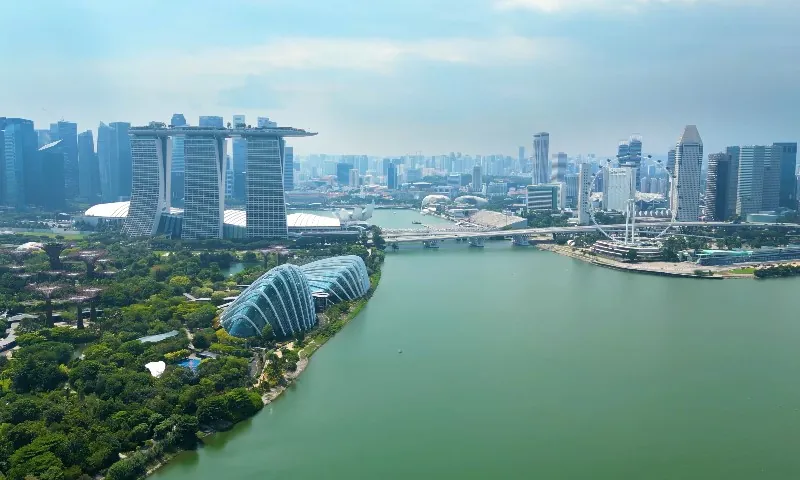
Visitor numbers are climbing again in Singapore, but the financial outlook for 2026 is less straightforward.
International arrivals are expected to reach 17 million to 18 million, compared with 16.9 million in 2025.
Higher arrival numbers, however, may not produce another spending record. Tourism receipts reached S$32.8 billion in 2025 but are forecast at S$31 billion to S$32.5 billion in 2026.
Such a gap points to a major change in visitor behavior. More people may enter Singapore, yet each traveler could spend less on accommodations, shopping, dining, and entertainment.
Success in 2026 will therefore depend on visitor value as much as total volume.
What Higher Visitor Numbers Mean for Hotels and Travelers

Hotel operators may experience stronger conditions than many other tourism-related businesses.
Room supply is not increasing as quickly as visitor demand, which can support higher occupancy levels and room rates.
Market projections indicate that Singapore’s hotel sector could grow at a compound annual rate of approximately 4.15% between 2026 and 2034.
Premium properties near Marina Bay, Orchard Road, and the southern waterfront are especially well positioned to maintain strong pricing.
Major conferences, concerts, sporting events, and festivals can quickly reduce availability.
Rate increases may extend across the city during high-demand dates, including areas outside the immediate event district.
Changing hotel rates, limited availability, and crowded event calendars can make professional booking assistance more valuable.
People who want to help clients manage these details can become a travel advisor by finding a host travel agency that provides training, supplier access, booking tools, and ongoing support.
Travelers seeking better value should consider several booking practices:
- Reserve city-center hotels three to six weeks before arrival.
- Book Marina Bay and Sentosa resorts earlier when travel dates overlap with major events or school holidays.
- Consider midweek stays, which may offer better rates than Friday and Saturday nights.
- Look for periods between school holidays and major event dates.
- Check loyalty discounts, corporate rates, and credit-card partnerships before confirming a reservation.
Cheaper rooms may be available in districts outside Marina Bay and Orchard Road.
Singapore’s public transportation system makes many such locations practical for visitors who prioritize access over a premium address.
Impact on Singapore’s Tourism Industry
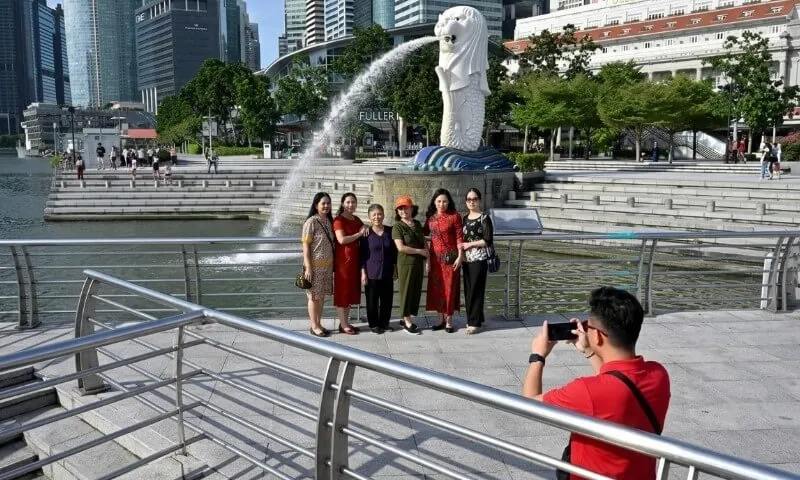
Higher visitor volume will not benefit every part of the tourism economy equally. Hotels and integrated resorts may gain through high occupancy, limited room supply, and demand among premium travelers.
Retailers, restaurants, and smaller attractions face a more difficult environment when guests reduce discretionary purchases.
Pressure was already visible during the first quarter of 2026.
Retail and food-and-beverage business closures increased by 29% compared with the same quarter one year earlier.
Vacancy figures also point to softer retail conditions:
- Business Times showed Orchard Road’s retail vacancy rate rising to 7.2% in the second quarter of 2026, compared with 7.1% in the previous quarter.
- Vacancy rates also increased to 8.3% in the Rest of Central Region and 5.2% in the Outside Central Region.
Lower visitor spending can affect many connected businesses.
Restaurants receive fewer high-value bookings, stores process smaller purchases, and attractions sell fewer premium tickets or add-ons.
Airlines, cruise operators, transportation companies, and event organizers can also experience lower revenue per customer.
Smaller businesses may feel these changes most sharply because they often have less flexibility to absorb higher rent, labor, utility, and supply costs.
Greater attention must go to trip duration, daily expenditure, repeat visits, geographic distribution, and the number of local businesses receiving visitor revenue.
Key Singapore Tourism Statistics for 2026
Singapore recorded 16.9 million international arrivals in 2025.
Forecasts place the 2026 total between 17 million and 18 million, suggesting modest growth even at the lower end of that range.
Spending projections tell a different story. Tourism receipts reached a record S$32.8 billion in 2025, while the expected 2026 result ranges between S$31 billion and S$32.5 billion.
Average receipts per visitor help put these figures into context:
- Each visitor generated approximately S$1,941 on average in 2025.
- Average receipts could drop to about S$1,722 if arrivals reach 18 million and receipts total S$31 billion.
- A stronger result of 17 million arrivals and S$32.5 billion in receipts would equal approximately S$1,912 per visitor.
First-quarter data showed arrivals running 3% above the same period in 2025.
Singapore Tourism Board officials still warned that demand could weaken during the following months.
Tourism also has importance outside hotels, attractions, and entertainment venues.
Visitor spending accounted for approximately 6% of Singapore’s service-sector exports in 2024, connecting tourism performance with employment, transportation, retail activity, and national export earnings.
Why Visitor Spending Is Declining
Price-conscious travel behavior is one major reason for the expected decline in average spending.
Visitors may still choose Singapore, but many are reducing trip costs through shorter stays, lower-priced accommodations, and fewer paid activities.
Shopping has become a smaller part of the typical travel budget.
Retail purchases now account for less than one-fifth of average visitor spending, limiting the benefit that rising arrival numbers provide to stores and shopping districts.
Early 2026 also brought weaker traffic in two important regional markets:
- Indonesian arrivals declined by 13.3%.
- Malaysian arrivals declined by 14.7%.
Regional visitors often contribute through short leisure trips, shopping, dining, medical visits, and business activity.
Declines in these markets can place additional pressure on companies that rely on frequent, shorter visits.
Middle East tensions and higher fuel prices are creating another challenge.
More expensive flights can reduce disposable travel budgets, encourage shorter vacations, or lead consumers to choose destinations closer to home.
Weaker economic confidence can influence corporate travel as well.
Singapore’s Long-Term Tourism Strategy
Government investment aims to help the sector increase visitor value and prepare for future competition. Singapore plans to add S$740 million to its Tourism Development Fund over five years, following more than S$300 million announced in 2024.
Funding will support tourism companies as they improve products, reach new markets, upgrade technology, and strengthen their ability to compete.
Assistance may prove especially important for smaller operators dealing with higher costs and changing traveler preferences.
Tourism 2040 sets a long-term annual receipts target of S$47 billion to S$50 billion.
Reaching that level will require more than increasing arrival totals.
Changi Airport provides a strong base for continued growth, with passenger movements reaching a record 69.98 million in 2025, an increase of 3.4% compared with 2024.
Extensive flight connections allow Singapore to attract long-haul guests, regional travelers, business visitors, and passengers adding a stopover to a wider Asian itinerary.
Strong airport capacity, major events, modern hotels, and continued public investment give Singapore several advantages. Turning those strengths into higher expenditure per visitor will be the central task during the years leading to 2040.
FAQs
Summary
Singapore is expected to welcome 17 million to 18 million international visitors in 2026, yet tourism receipts may decline to S$31 billion to S$32.5 billion.
Such an outcome would place average visitor spending below the approximately S$1,941 recorded in 2025.
Singapore’s 2025 record of S$32.8 billion sets a demanding benchmark.
Progress in 2026 will depend on converting strong arrival numbers into longer stays, higher daily expenditure, and broader economic gains across the tourism sector.