
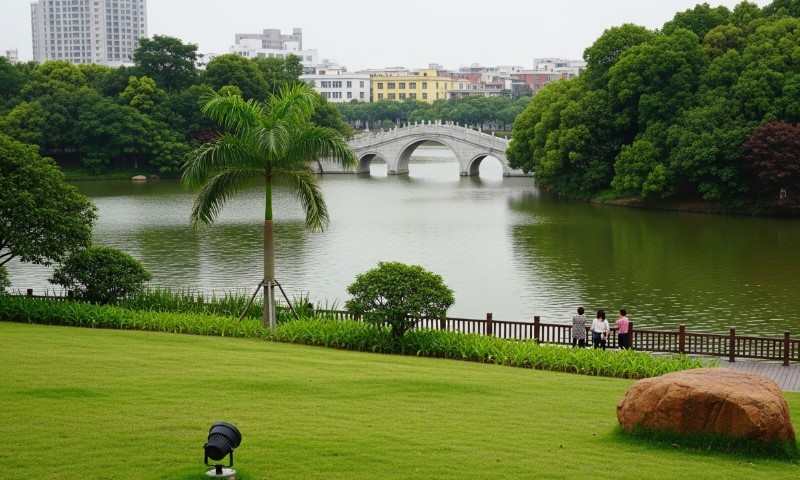
Most visitors meet Singapore through Marina Bay, Orchard, Chinatown, and the polished downtown grid. Northern Singapore tells a different story. Up there, the pace loosens.
The skyline gives way to mangroves, reservoirs, kampung traces, wildlife parks, long park connectors, hawker centres, and neighborhoods where daily life matters more than postcard framing.
If you only stay in the center, you miss a useful part of the country’s character. Northern Singapore shows how much of the island still leans on nature, public planning, and heartland culture at the same time.
You can spend a full day there and come back with a version of Singapore that feels quieter, greener, and far more layered than the business district suggests.
Why Northern Singapore Feels Different
Northern Singapore is not one single district. It is more like a loose belt of places, Woodlands, Yishun, Sembawang, Kranji, Mandai, and the wetland areas stretching toward the Johor Strait. What ties them together is space.
Compared with the city core, there is more room for reservoirs, farms, coastal edges, marshes, forest corridors, and large parks. NParks’ Northern Explorer Loop alone links 11 parks and nature areas across Sembawang, Woodlands, and Yishun, which gives you a sense of how strongly the north is organized around outdoor movement rather than landmark-hopping.
You are less likely to rush from one attraction to the next, and more likely to notice the shift between mangrove boardwalks, neighborhood food spots, military-era history, and family parks full of local residents rather than tour groups. That change in rhythm is part of the appeal.
Getting There Is Easier Than Many Visitors Expect
The north is not remote. Singapore’s rail network makes it fairly straightforward to reach northern districts by MRT, and places like Mandai have dedicated connections from Khatib MRT Station.
Mandai’s M2 Khatib shuttle runs daily, with buses typically arriving every 15 minutes during most operating hours, and the trip takes about 20 minutes.
For independent planning, the Land Transport Authority’s MRT system maps and journey tools make route planning simple even if you are staying downtown.
That said, northern Singapore rewards a little preparation. A strong plan is to pick two anchor stops and one lighter, flexible stop in between.
Trying to cover Mandai, Sungei Buloh, Kranji Marshes, Sembawang Hot Spring Park, Woodlands Waterfront, and a full hawker crawl in one day will turn a good outing into a transport exercise.
A Smart One-Day Route
Here is a realistic version of the day for a first-time visitor.
| Time | Stop | What You Get |
| 8:00 AM | Sembawang Hot Spring Park | A quiet, local start and a side of Singapore many visitors never see |
| 10:00 AM | Sungei Buloh Wetland Reserve | Mangroves, migratory bird habitat, mudflats, and long boardwalk views |
| 1:00 PM | Kranji or Yishun lunch stop | Heartland food, local rhythm, and a break from walking |
| 3:00 PM | Mandai or Woodlands Waterfront | Wildlife attraction option or coastal northern edge view |
| Evening | Sembawang Park or a return via hawker centre | Low-key finish instead of a downtown rush |
You can swap Mandai and Sungei Buloh depending on your energy and budget. Mandai works better when you want a polished, structured attraction. Sungei Buloh works better when you want a more open, low-cost, nature-first day.
Start Early at Sembawang Hot Spring Park
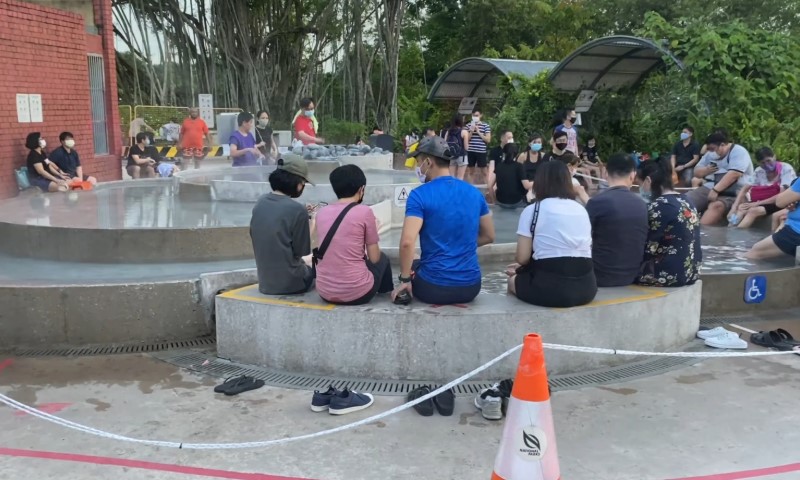
Sembawang Hot Spring Park is one of the strongest examples of why the north feels different. It is Singapore’s only hot spring park, set in a rustic layout that feels unusually grounded compared with the country’s better-known urban showpieces.
The park includes a cascading pool area designed for foot soaking, plus a water collection point that regular visitors often use with buckets or bottles.
NParks also notes that the cascading foot bath pool closes every Monday and Thursday from 11 AM to 2 PM for maintenance, and there is a temporary entrance and footpath adjustment in place through 10 April 2026 due to maintenance works.
What makes the stop worth it is not scale. You are not going for a huge attraction. You are going for atmosphere.
Early in the morning, the park is full of routine rather than spectacle, retirees chatting, families testing the warm water, and residents treating the place as part of ordinary life. For a traveler, that is valuable. You get to see Singapore outside its commercial performance mode.
What To Expect at the Hot Spring
Bring sandals, water, and a little patience. The park is pleasant, but it is not designed for speed. Sit for a while. Watch how locals use the space. Walk the floral areas after the soak. Give yourself an hour, maybe a little more if you enjoy slow mornings.
Move Next to Sungei Buloh Wetland Reserve
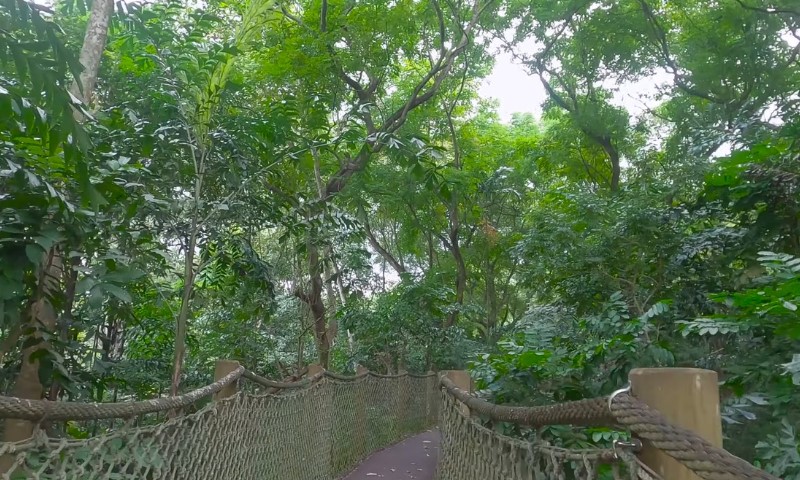
After Sembawang, head west toward Sungei Buloh Wetland Reserve. If downtown Singapore is often described through architecture and consumption, Sungei Buloh is better described through habitat.
NParks identifies it as Singapore’s first ASEAN Heritage Park, and the reserve is known for mangroves, mudflats, biodiversity, and its role as an important stop for migratory birds.
Park hours are 7 AM to 7 PM, with last entry at 6:30 PM. Self-guided walks are free, and the reserve includes trails such as the Migratory Bird Trail, Mangrove Boardwalk, Coastal Trail, and Forest Trail.
For many travelers, Sungei Buloh is the real surprise of the north. Singapore’s global image is so bound up with density and order that visitors often do not expect a wetland reserve of real ecological importance to sit within a relatively short journey from the center.
Why Sungei Buloh Leaves Such a Strong Impression
The reserve changes how you read the country. You begin noticing that northern Singapore is not an afterthought to the city. It is part of the way Singapore protects ecological corridors while still keeping them accessible.
NParks’ broader Sungei Buloh Nature Park Network includes Kranji Marshes, Kranji Reservoir Park, Mandai Mangrove and Mudflat, and related eco-corridors, reinforcing the north as one of the island’s key conservation zones.
Walk slowly here. Watch the waterline. Keep an eye on boardwalk edges and mudflat zones. Depending on season and luck, birdlife can be a major part of the experience.
Even when wildlife sightings are modest, the textures alone carry the visit: roots, water, exposed mud, watch towers, long wooden paths, and the feeling that you are standing at a very different edge of Singapore.
Kranji Adds a Rural Layer Most Visitors Never See
Once you are in the northwestern part of the island, Kranji becomes one of the most revealing additions to the day.
Kranji Countryside still carries traces of agricultural Singapore, and the local association continues to frame the area around agritourism, workshops, dining, attractions, and itineraries. It is one of the clearest reminders that Singapore’s story is not only one of towers and finance.
The farm remains one of the most distinctive family-friendly experiences in the Kranji area, especially for visitors who want a softer, more local break between the wetlands and the city-facing parts of the day. Its current site also emphasizes just how unusual rural land use feels in Singapore’s broader urban setting.
You do not need to romanticize Kranji to enjoy it. The better way to think about it is as a working fringe. Parts of it feel intentionally educational, parts feel improvised, and parts feel like the last visible edge of older land use patterns hanging on beside modern infrastructure.
Lunch in the North Feels Different Too
Food in northern Singapore is less about destination dining and more about how locals actually eat. Yishun, Woodlands, and the Chong Pang area give you hawker-centre and market options that fit naturally into the day.
If you are stopping in the area and need a practical errand sorted before continuing north, you can also find phone repair in Yishun without straying far from the route.
NEA’s hawker-centre listings confirm the presence of northern staples such as Chong Pang Market and Food Centre and Yishun Park Hawker Centre, both of which sit well within a day spent moving through northern neighborhoods.
You are likely to get a more useful travel memory from lunch here than from another meal in a central mall. Sit down somewhere busy but not frantic. Order something simple. Watch the lunch crowd. Northern Singapore often makes the strongest impression in mundane moments like that, when office workers, retirees, parents, and students all pass through the same space without much performance attached to it.
What Kind of Food Stop Works Best
A hawker centre works better than a café if your goal is context. A café works better if you need air-conditioning and a reset.
For most travelers, one hawker meal is the better call. It keeps the day grounded and cheaper, and it fits the logic of the north, practical, local, and unhurried.
Decide Between Mandai and a More Open-Ended Afternoon
By mid-afternoon, you have two strong directions.
Option 1: Mandai for a Structured Attraction
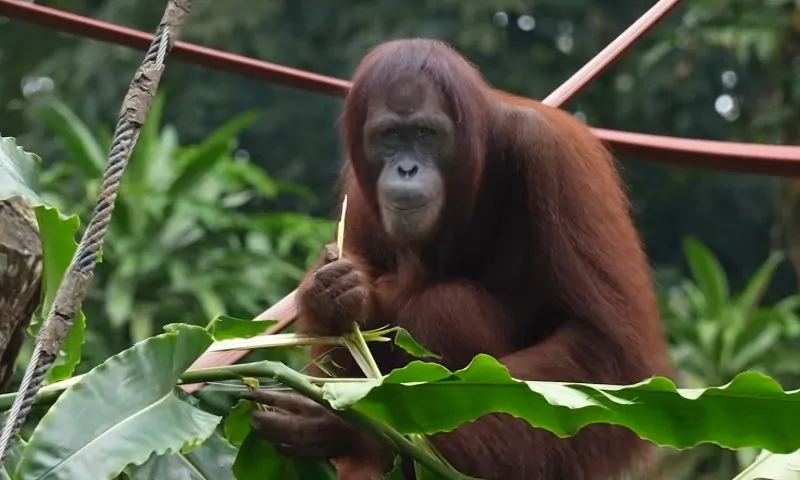
Mandai Wildlife Reserve is the polished version of northern Singapore. Official Mandai materials describe it as a large integrated wildlife destination spanning over 126 hectares, home to attractions including Singapore Zoo, Bird Paradise, River Wonders, and Rainforest Wild Asia.
Singapore Zoo alone houses more than 4,200 animals and keeps daily operating hours from 8:30 AM to 6 PM, with last entry at 5 PM.
Mandai works well when you want one major ticketed attraction with clear logistics. It is also the easiest part of the north to plug into a first-time itinerary because the shuttle from Khatib MRT simplifies access.
If you have already spent a slow morning in wetlands and parks, Mandai gives the second half of the day more structure.
Option 2: Woodlands Waterfront for Space and Air
If you do not want another large attraction, head to Woodlands Waterfront Park. NParks describes its 400-metre jetty as the northernmost point of mainland Singapore, with waterfront promenades and open views toward the Johor Strait. It is a good late-afternoon stop because it asks very little of you. You walk, sit, take in the air, and watch the edge of the island do its quiet work.
For travelers who have already packed several museums, malls, and skyline stops into the rest of a Singapore trip, Woodlands Waterfront can feel oddly refreshing. There is no pressure to optimize the visit. You simply spend time at the northern edge of the mainland and let the day slow down.
Sembawang Park Is Another Strong Finish
View this post on Instagram
A second good closing option is Sembawang Park. NParks describes it as a serene beachside park facing the Straits of Johor, with links to Singapore’s naval history. It also connects into the park-connector network and sits near one of the few natural beaches remaining in Singapore.
Sembawang Park feels especially good in the evening. The light softens. The area becomes more residential in mood.
Families gather, joggers pass through, and the city-center idea of Singapore feels far away, even though you are still on the same island. If your day began with warm spring water and wetlands, ending by the coast ties the north together neatly.
What Northern Singapore Does Better Than the Center
Northern Singapore does not beat the city center on spectacle. It wins on range.
In one day, you can move from hot spring foot baths to mangrove boardwalks, from goat-farm countryside to major wildlife attractions, from hawker lunch to a waterfront jetty facing the strait. Very few cities let you do that without crossing into a completely different region.
Singapore’s transport planning and park networks make such transitions unusually smooth. The Northern Explorer Loop, the Sungei Buloh Nature Park Network, and Mandai’s dedicated shuttle access all point to the same thing: the north is not peripheral in any careless sense. It is planned, connected, and deliberately usable.
Parks are not decorative sidelines up there. They are everyday infrastructure. Wetlands are protected spaces. Park connectors are transport and recreation at once. Hawker centres remain social anchors. Once you spend a day in that setting, the country starts making sense in a broader way.
Practical Tips Before You Go
A northern Singapore day works best with a few simple habits in mind:
- Start early, especially if Sungei Buloh or Sembawang Hot Spring Park is on the list.
- Wear walking shoes or sandals you do not mind using in humid, occasionally damp areas.
- Carry water and sun protection.
- Check official notices before leaving, especially for parks with maintenance schedules or temporary access changes.
- Avoid overbooking the day. Two or three major stops are enough.
- Use public transport where possible, then add short taxi or ride-hail segments only when needed.
Who Will Enjoy the North Most
Northern Singapore suits travelers who like cities but do not want every day of the trip to feel urban in the same way.
It is a strong fit for birdwatchers, photographers, families, walkers, repeat visitors, and anyone who has already seen the major downtown attractions. It also works for travelers who want more from Singapore than efficiency and visual polish.
If your idea of a good travel day includes watching local routines, seeing how green space is actually used, and feeling the edges of a place rather than only its highlights, the north gives you plenty to work with.
Summary
A day in northern Singapore changes the shape of a Singapore trip. You still get order, infrastructure, and easy movement, but you also get wetlands, reservoirs, hot springs, farms, waterfront parks, and neighborhoods that feel lived in rather than staged. For many travelers, that is where the country becomes most interesting.